Is Coding Still Relevant in 2026?

This article contains an affiliate link. We earn commissions when you shop through the link below, at no additional cost to you.
When commercial AI models were made available to the public in 2023 through the (in?)famous interface we now know as ChatGPT, people soon realized that rather than just generate text akin to speech, large language models could also generate code as well. Code, after all, is a form of language. It is a language designed by humans to communicate with the binary minds of computers; designed and abstracted so that instead of typing 0's and 1's, we could use a type of language closer to natural language to communicate our instructions to machines - otherwise known as programming languages.

At each stage of inventing newer programming languages, there was always an attempt to make the language less tedious to write, and closer to human language. Each had its own specific function, optimized for specific machines and ways of logic. To date, there is an estimated 14,000 programming languages.
So you can imagine how wearying it can be to have mastery over not just one, but multiple programming languages - all while practising the explicit logic of relaying instructions to a computer. Especially with the boom in software in the early 2000s, those who mastered programming languages, otherwise known as programmers or coders, were increasingly highly valued assets in the job market. Inevitably, as the job market (and salaries) began to significantly favour those possessing coding skills, coding became a highly coveted skill to attain. So the question of the relevance of coding as a skill was never doubted before.... until now.
Now with the availability of Large Language Models (LLMs) that can generate any length of text through prediction - including code - the paradigm of programming is changing. No longer do programmers have to memorize esoteric coding syntax or stress over their mastery of a variety of programming languages. Coding has also become democratized, now being accessible to people who do not have a foundation in coding. Now it seems you do not actually need to actually know how to code in order to generate code.
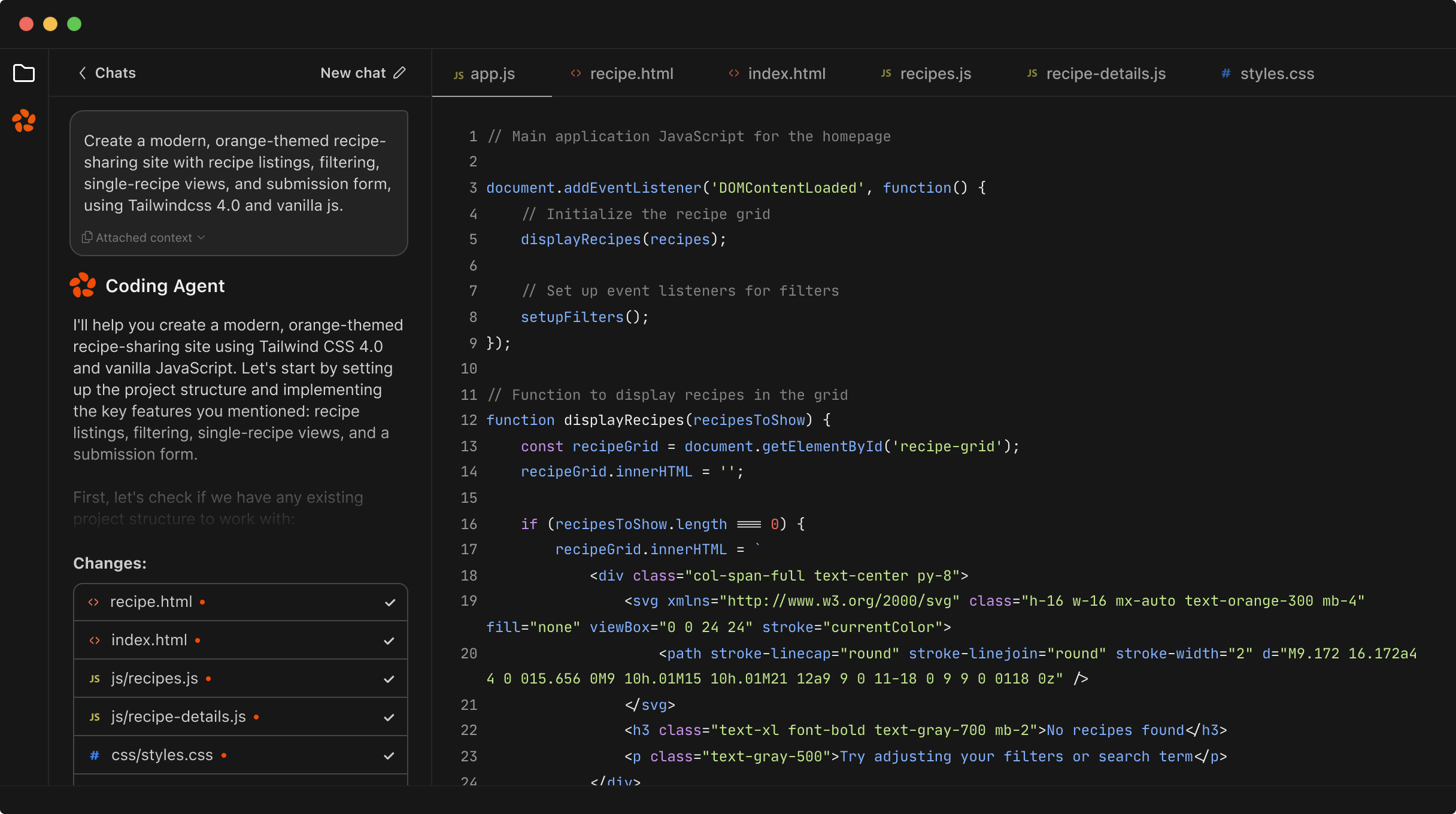
As three software engineers who started a tech podcast, this question undoubtedly hangs over our head more than most: is coding still relevant then, if AI can generate code? Alot of the scope of our own jobs at our full-time workplaces are changing, as we see more organisation-driven motivation to adopt AI in our work as software engineers. Much of code is now AI-generated instead of written manually, and we've had to learn how to prompt well and engineer good harnesses (infrastructure to safeguard code from errors by coding agents).
In this latest episode of ragTech, we decided to speak honestly about our thoughts around the relevance of learning coding, especially for the those who aren't tech professionals and are wondering if coding is worthwhile to learn. This blogpost distills the keypoints from our discussion.
Niching Down of Software Engineering Roles
Saloni, our ragTech co-host and a senior software engineer with more than 10 years of experience as a software engineer, feels that there may not need to be such a huge concentration of software engineers performing generic roles. Instead, she foresees a niching down in roles that are now in higher demand due to the increased use of AI. For example, the large-scale deployment of AI has necessitated the accelerated development of data centers all around the world. In line with this new engine of growth, the need for engineers to maintain these data centers would rise as well.

Other than the expect rise in demand for AI/ML engineers, Saloni hypothesized that software engineers affiliated with data centers could become a role in higher demand. DevOps (Development Operations) engineers or Platform Engineers are also one such role that could be in high demand, suggests Natasha, our ragtech co-host and software engineer. With AI democraztizing app deployment, more applications than ever are being deployed on the internet and definitely more code is being shipped, thus requiring more DevOps engineers to manage the increased load of app deployments and maintaining them.
Regardless, all three of us agreed that having the fundamentals of coding is still important regardless of the type of role, as you would still need sufficient context of how programming and coding looks like to be able to use coding agents correctly in the job.
Software Engineering =/= Coding
Victoria, our ragTech co-host and a lead solutions engineer who frequently interviews and interacts with junior engineers, remarks that coding itself may not be as relevant as high-order programming skills, like system design. Nowadays instead of asking what languages and frameworks a junior engineer has mastery on, she emphasizes more on system design and product engineering skills. Whether they can suggest solutions to solve problems, whether they can understand the bigger picture, and why they are building a certain feature in the first place.
AI can do the work for you, but now you, as the human, have to do the thinking. - Victoria, ragTech co-host
She finds that most people often perceive software engineering as being solely about writing code, just as her own parents did. With AI, however, the distinction between coding and engineering is made clearer, as AI can do the former but the latter still needs to be part of the human thinking process. Nevertheless, to be able to engineer a solution, yo need to be able to understand code and the logic of how it works. Much like the English language has become a standard, fundamental skill taught in schools, coding has to be regarded as a pre-requisite to higher-order engineering skills. Saloni adds that without understanding code and how it works, you would not be able to understand the basic engineering principles needed to build applications.

However, this might mean the way we approach learning how to code might be different. Natasha urges viewers to no longer deliberate on which coding language to learn, as memorizing syntax of specific languages is no longer of significant value given that AI coding agents can generate those well. Instead, pick one coding language that is most accessible to you and instead focus on the principles and logic behind it.
An Emergent Skill: Agentic Software Engineering
There is, however, a new requirement to learning how to code now that AI has come into the picture. Saloni confesses that most software engineers, despite having years of experience in coding, actually do not know how to leverage on AI coding tools in their existing workflows. Software engineering with AI, otherwise known as Agentic Software Engineering, is a different approach and workflow from what we now understand as traditional software engineering.

It takes experimentation and a whole new learning curve to know which part of the software development lifecycle requires agentic augmentation, and also new judgment and discernment to apply those tools and build infrastructure around it. It takes knowing the limitations of AI, for example its tendency to hallucinate, to run out of context to continue a task, to understand constraints, in order to build sufficient guardrails around it to use it reliably.
There is a whole new set of skills coming up that will soon become a requirement of software engineers. Natasha, for example, currently develops AI harness infrastructure around codebases at her workplace in order for her software engineering teams to use AI safely and reliably in their software engineering workflows. And given that this is still a very nascent field, all the more so we need coders of various roles and experiences, from Quality Assurance to Cybersecurity Analysts, to come together and design playbooks around how AI is being used across an organisation.
Learning How to Code is a Requirement To Take Responsibility Over an App
Vibecoding has now made it seem that app development is now accessible to all, but Victoria and Natasha have a different perspective. It gives the illusion of building deployable, dependeable apps, building a false sense of trust for the vibecoder who confidently deploys it. Without understanding the basics of code and app development, the vibe coder has no real basis to judge the deployability and reliability of the app built by their AI agent.
This ends up with many vibecoded apps being deployed that have major security flaws. Incidents like Moltbook, the AI agent social platform that was vibecoded and exposed the API keys of 1.5 Million users' agents, are occuring at a higher frequency than before largely due to this fact.
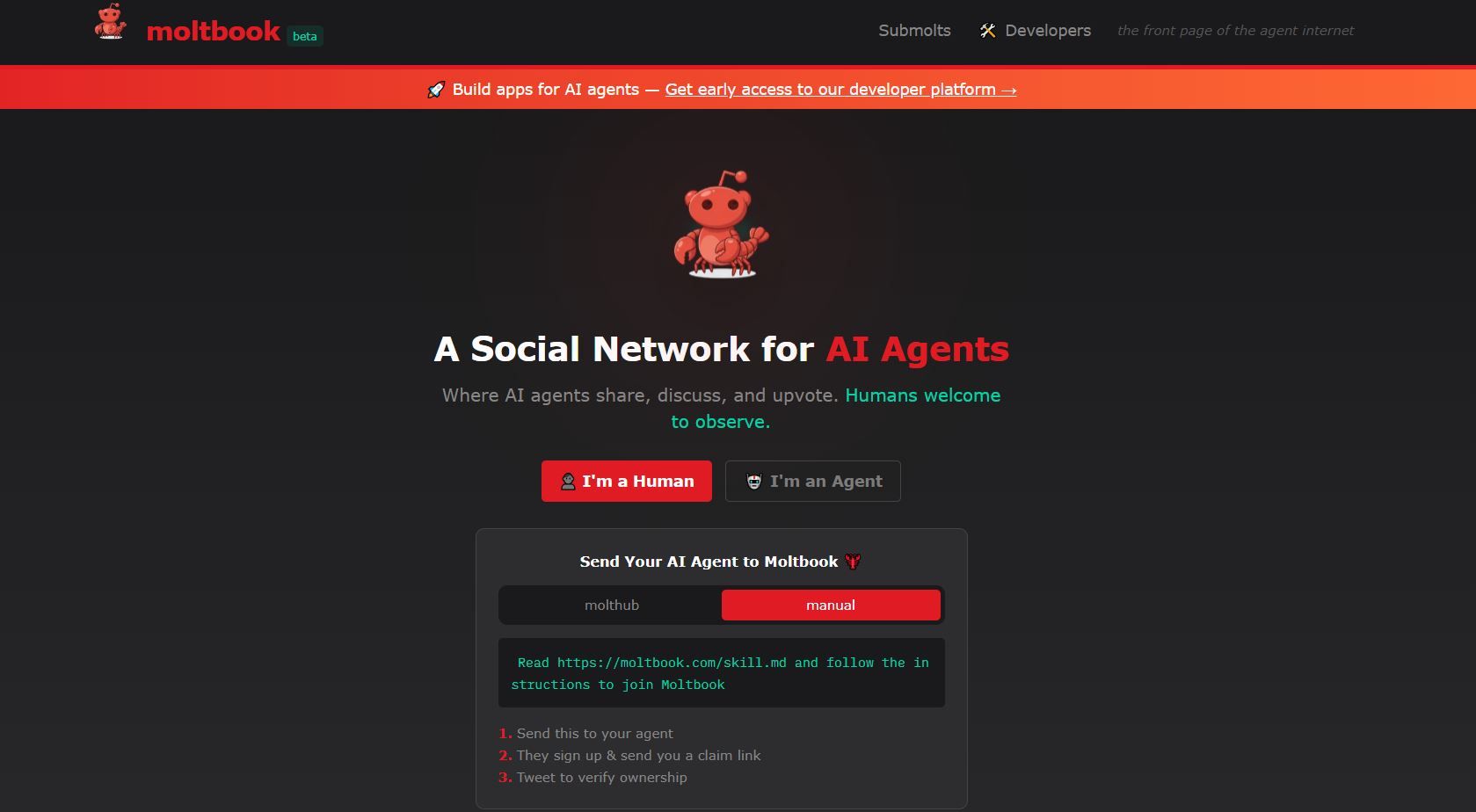
Natasha and Victoria hence feel that those using AI coding agents to create apps that will affect multiple users need to learn how to code in order to be able to take adequate responsibility over their apps. It is insufficient to blame the AI coding agents when such risks manifest into consequences, and irresponsible even.
Conclusion
In sum, coding is definitely still relevant - and actually, more relevant than ever before in the age of AI. It has hecome a fundamental skill that everyone should learn given that now, everybody has the ability to generate code and create apps through the use of AI. Nevertheless, we cannot deny that the landscape of software engineering is changing. We may see some fluctuations in demand for cetain software engineering jobs, and possibly and increase in demand in those that are affiliated with data center operations and app deployment. A good idea for current software engineers might be to niche down to these roles that are increasing in demand. More so than ever, software engineers would benefit from learning how to use AI in their software engineering workflows.
Watch the full episode on YouTube!
At ragTech, we aim to make learning code, tech and AI more accessible to both techies and non-techies. As always, we hope you enjoyed this episode, and do subscribe to our newsletter and to whichever channel (YouTube, Spotify, Apple Podcasts) you enjoy streaming our podcast episodes at to show us your support!
ragTech is a podcast by Natasha Ann Lum, Saloni Kaur, and Victoria Lo where real people talk about real life in tech. Our mission is to simplify technology and make it accessible to everyone. We believe that tech shouldn't be intimidating, it should be fun, engaging, and easy to understand!
✨ragTech Spotify: https://open.spotify.com/show/1KfM9JTWsDQ5QoMYEh489d
✨ragTech YouTube: https://www.youtube.com/@ragTechDev
✨Instagram: https://instagram.com/ragtechdev
✨Other Links: https://linktr.ee/ragtechdev
Recommended Articles
Subscribe to our newsletter!
Read articles from ragTech directly inside your inbox. Subscribe to the newsletter, and don't miss out.