Is AI the New Colonialism? The Global South Fights Back

This article contains an affiliate link. We earn commissions when you shop through the link below, at no additional cost to you.
There is a sentence in Sudhir Tiku's new book, AI in the Global South: Power, Progress, and Policy:
The most radical act today is not coding an algorithm but claiming the Right to Imagine outside the defaults — not asking 'How can we adapt to this new technology?' but instead, 'How should intelligence itself be defined, and to what ends should it serve?'
That is a question most of us — even those of us who build software for a living — have never once stopped to ask. And the fact that we haven't is precisely the point.
In this latest episode of ragTech, we sat down with Sudhir Tiku: Singapore-based AI professional, ethics advocate, and now published author. His book, released by World Scientific (a publisher whose catalogue is prescribed reading at Harvard, Stanford, Princeton, and Caltech), is the culmination of two years of essays, field visits, and research into one of the most underexplored blind spots in the AI conversation: the Global South.
This was one of the most thought-provoking conversations we have had on this podcast. Here is what we took away from it.
Who is Sudhir Tiku?
Sudhir has over two decades of experience in applied automation and AI in global companies across multiple continents. He is a founding member of the Alliance for AI and Humanity in Singapore, a member of the International Association for Safe and Ethical AI in the USA, and the founder of MiFund — a charity aiming to provide free education to 10,000 girls in three years.
He is also one of those rare people who, upon noticing an injustice in the world, does not simply post about it — he books a flight to Kenya, emails Timnit Gebru and Fei-Fei Li (well-knbown personalities in the AI and AI Ethics industry), writes 200 pages of essays, gets them published, and then asks what to do next.
What Even Is the Global South?

It is not only a geography — though it is that too. The Global South spans large parts of Asia, the Middle East, Latin America, and Africa. Over 75% of the world's population lives there. Most of the young people in the world live there.
In the context of AI, however, the Global South becomes something more specific: a position in the global technological system. And it is not a good position.
The Global South provides the fuel that powers AI — the data generated from mobile transactions, financial records, languages, health records, and agriculture. It provides the labor that trains AI models: the thousands of workers in Venezuela, Chile, Hanoi, Bangalore, and Jakarta who label images, annotate text, transcribe audio, and moderate violent content for a few dollars a week. These workers are now being called the Digital Proletariat — an invisible workforce without contracts, social security, or visibility to the people using the AI systems they make possible.
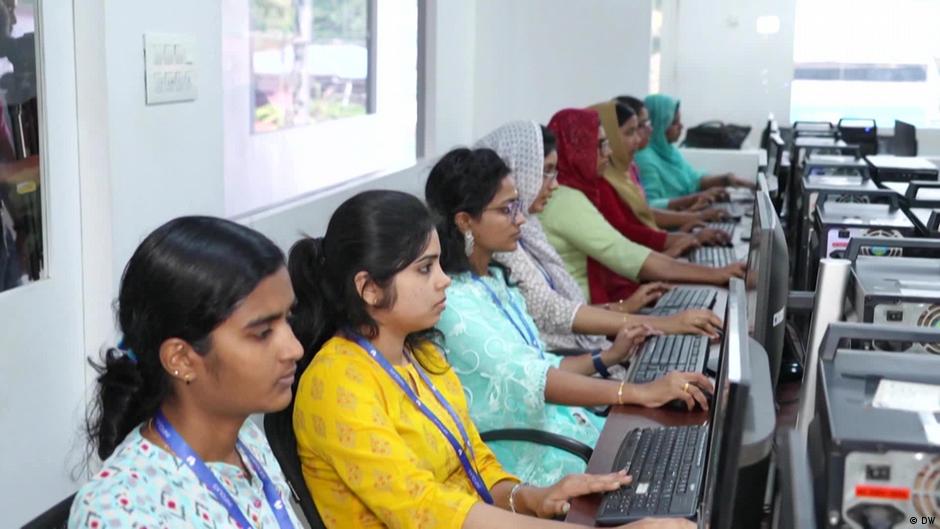
But as you move up the AI value chain — from data, to infrastructure, to model training, to platform distribution — the Global North takes an increasingly dominant position. The Global South provides the raw material. It rarely owns the factory.
"The marker of independence in future will be data. And if you don't have control on your data, you will not be free."
The Biggest Misconceptions
Sudhir pushes back on two widely held assumptions about AI and the Global South.
Misconception 1: People in the Global South can simply be passive users of AI. This narrative, he argues, is not only misplaced — it is dangerous. A credit scoring model built on Western financial behavior will flag most people in the Global South as defaulters. An English-language AI assistant cannot understand the metaphors, contexts, and cultural nuances of 6,000+ other languages. An AI trained on data from the Global North does not know what it does not know about the lives it is making decisions about.
Misconception 2: You need massive compute to participate in AI. Sudhir reframes this entirely with what he calls the AI bicycle vs. AI rocket distinction:

For the Global North, AI is like a rocket — fast, expensive, big headlines. For the Global South, we don't need a rocket. We need a bicycle. We need use cases which help us on a day-to-day basis.
Frugal innovation — building capable AI systems under constraints of bandwidth, compute, and resources — is not a consolation prize. It is a different kind of mastery. And it is already happening.

AI That Actually Works for People: Real-World Examples
These are not hypothetical. They are already running.

- Vietnam and Chile: AI models trained on images of diabetic eyes from the region (because Asian eyes differ from Western eyes) can now predict blindness before it happens.
- South Africa: Predictive analytics using imaging to improve safety for deep-earth miners — preventing the kinds of tragedies that have claimed so many lives in that industry.
- Kenya: MPESA, with AI models layered on top, has brought financial inclusion to millions of people who have never had access to a bank account, by scoring creditworthiness based on mobile phone usage.
- India: AI trained on local soil quality and seasonal patterns gives farmers precise guidance on when to plant their seeds.
- Bangladesh: Predictive maintenance AI in garment factories — the backbone of luxury manufacturing globally — improves both machine productivity and worker safety.
- Southeast Asia: The SEA-LION project trains language models on the local languages of the region, because language is not merely a communication tool. It is identity. It is culture. Losing it to AI systems that only understand English is a form of erasure.
As Sudhir puts it: a student in La Paz or Lagos should be able to learn physics in their own language. That is not a nice-to-have. That is what genuine inclusion looks like.
Technological Agency: Stop Being Shipped. Start Shipping.
This was the concept that hit closest to home for us as software engineers.
Sudhir introduces the idea of productive inclusion — not just being included in AI development, but being a meaningful participant who can build, govern, and shape it. He draws on the work of Nobel Prize-winning economist Elinor Ostrom, who argued that the goal of governance is to ensure users are shaping technology — because if you are not shaping technology, technology will shape you.
:max_bytes(150000):strip_icc()/Elinor-Ostrom-v2-730ccd462cb444cfb9fee3d38d4b18d0.png)
This has been the story of the Global South for the last 500 years.
Are we just users, getting shipped? Or do we have the agency to also ship the technology?
The answer cannot remain the former.
Data Colonization: Not Via a Ship, But Via a Server
In the era of colonial empires, the markers of independence were three things: a flag, a currency, and a language. Today, Sudhir argues, the marker of independence is data. And data colonization is more insidious than land colonization precisely because it is invisible.
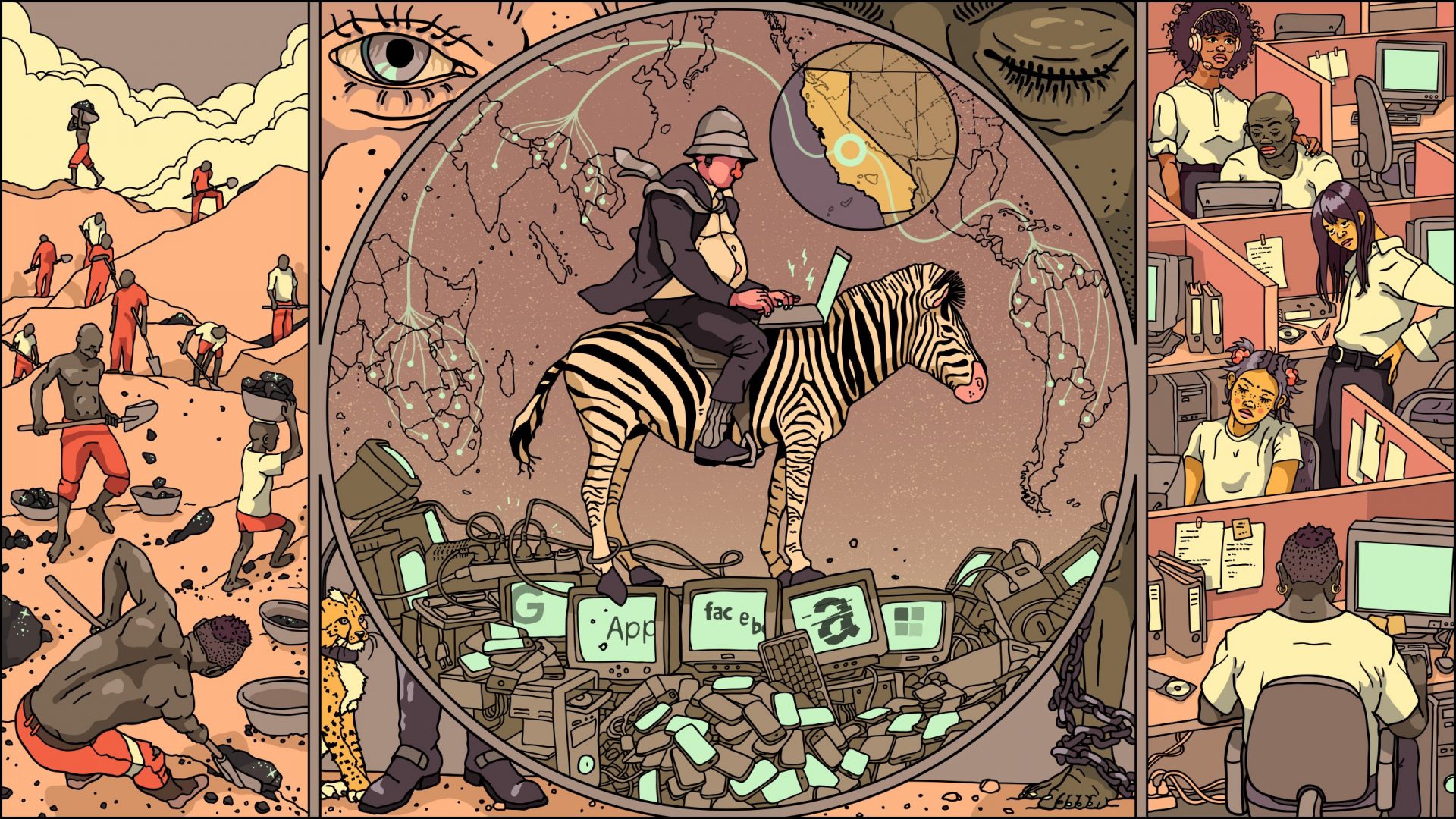
When colonizers seized land, there were historical records. There was documentation. With data colonization — when your health records, your financial behavior, your language, your culture get absorbed into a model you do not own, governed by a company you did not choose, in service of values that were never yours — you often do not even know it happened.
The Global South risks being colonized again. Not via a ship. Via a server.
Why It Still Matters (Even If It Has Happened Before)
One pushback we often hear when raising these issues: this kind of exploitation has always happened in agriculture, in supply chains, in every industry. Why is AI any different?
Sudhir says this:
The impact of technology happens across generations. The first generation only plays. The impact is on the next generation. What we do now may not impact you, but it will impact your son or daughter.
It is not enough to say it has happened before. That is not a reason to look away. It is a reason to act now — while the choices are still being made, before path dependency locks in outcomes that will take another generation to undo.
The Message Sudhir Wants You to Leave With
For technologists: design with context and accountability. What you build has an impact on ecosystems you may not be aware of. Become more aware.
For young innovators: constraint is a starting point, not a ceiling. The most interesting innovation often comes from having the least.
For policy makers: focus on long-term adaptation, not short-term adoption. The early choices lock in long-term outcomes, and those choices are being made right now.
Watch the full conversation below. Sudhir's perspective is one of the clearest, most compassionate, and most urgent we have had on this podcast. If you are a technologist, a policymaker, or simply someone who uses AI and wonders whether it is actually making the world better — this one is for you.
Watch the full episode on YouTube — and if it makes you think, share it with someone who needs to hear it.
Sudhir's book, AI in the Global South: Power, Progress, and Policy, is available now via World Scientific and Amazon. Get a copy for yourself!

And for our Singapore-based readers: Sudhir lists ASEAN as part of the Global South. Singapore sits in an unusual position — too developed for the label, too embedded in the region to ignore it. Where do you think we sit? And if we are somewhere in between, what is our responsibility? Drop your thoughts in the comments on YouTube.
ragTech is a podcast by Natasha Ann Lum, Saloni Kaur, and Victoria Lo where real people talk about real life in tech. Our mission is to simplify technology and make it accessible to everyone. We believe that tech shouldn't be intimidating, it should be fun, engaging, and easy to understand!
✨ragTech Spotify: https://open.spotify.com/show/1KfM9JTWsDQ5QoMYEh489d
✨ragTech YouTube: https://www.youtube.com/@ragTechDev
✨Instagram: https://instagram.com/ragtechdev
✨Other Links: https://linktr.ee/ragtechdev
Recommended Articles

Subscribe to our newsletter!
Read articles from ragTech directly inside your inbox. Subscribe to the newsletter, and don't miss out.